By Craig Westcott
One of the many events, milestones, celebrations and other big fetes laid aside because of the Covid-19 outbreak was the marking of the 400th anniversary of the founding of the Colony of Avalon.
It was in 1621 that George Calvert, better known to history as Lord Baltimore, sent a team of 12 men across the ocean to Newfoundland to build a colony that would not only capitalize on the island’s rich fishery, but also proposed to serve as a safe haven for Englishmen who wanted to continue their religious faith as Roman Catholics.
So, in the years leading up to the 400th anniversary of the founding, in 2021, there was considerable excitement and speculation in Ferryland as to how to best mark the occasion. Then came Covid with its social distancing and dampening of the world’s tourism industry.
Four years later, the Colony is on the verge of making up for that missed opportunity, thanks to several important events this past summer that the people who run the Colony hope will spur tourism to the archeological site for years to come.
The first was news that the Colony had made Trip Advisor’s list of the best places to visit on the planet.
“We were over the moon,” said Renee Houlihan, who took over as executive director of the Colony’s operation this past summer. “We were almost incredulous that we would receive such an award. Basically, Trip Advisor awarded us a Top 10 percent of places to visit in the world. And that put us up in the category of the Louvre, the Eiffel Tower, or the Crystal Caves down in the Caymen Islands. These were the other top finishers. So, for us to get that up in Ferryland at the Colony of Avalon was absolutely mind blowing.”
Houlihan figures the Colony won the distinction in part because it’s small.
“You’re not going to Stonehenge in England where you have 500,000 tourists on top of you.,” she said. “One of the beautiful things about the Colony of Avalon is it’s so peaceful and quiet, so you have space to take it all in. We don’t have the throngs of people like these other tourist attractions have. So, for every single person who comes though it’s a very intimate connection from our tour guides. And our tour guides are local. So, they just don’t get the history of the past 400 years, they also get to meet the local people who live in Ferryland and who grew up in Ferryland adding another layer to the experience. They love the accent, the twang, they love hearing them talk, there’s just a lovely Irish lilt in Ferryland. So that’s a huge award for us.”
The second big thing that happened was the discovery of wampum beads at the dig site. Houlihan described it a once in a lifetime find.
“They’re little, tiny beads made out of Quahog (mollusk shells) and whelk,” she explained. “We know they weren’t made here, they were made on the mainland by an indigenous woodland tribe. We found seven, they are absolutely beautiful, they’re from the early 1600s, possibly the 1500s, and they’re the first ever find of wampum beads in all of Newfoundland and Labrador. They are so tiny and delicate and exquisite. To look at the craftsmanship of the beads that were made out of shell, I don’t think AI (artificial intelligence) could replicate how delicate and beautiful and intricate the artisan made these gorgeous beads. They came out of the earth like they hadn’t been down there a day. They shone.”
Wampum beads were used by many North American Indian tribes, especially in the 1600s and 1700s, often for important ceremonial purposes such as signifying treaties, trade deals and other important matters.
“We had coverage from the Smithsonian, we had coverage from Archaeology Magazine, which has a million subscribers, we had coverage from archaeology.ca, these are all down in the ‘States, and (CBC Radio’s) World Report covered it too,” said Houlihan. “So, it’s a big, big deal for the province.”
Houlihan said the wampum bead story got 200,000 views on the Colony’s webpage.
“We noticed immediately an upswell of inquiries as to when we open next year from people wanting to come to Newfoundland and see these beads,” she said. “We’re also working with an Indigenous tribe to come down and do a ceremony of blessing and to welcome them back. They believe the Creator gave those back to us, and they will come and do a blessing and that will be a beautiful story in itself.”
The third boon for the Colony was a visit by a Winnipeg-based television crew, who spent two days in Ferryland filming a segment for the show Fishing for History, which airs on Prime and Apple TV.
“And they found artefacts of their own, which they were thrilled, because sometimes on the show they don’t find anything,” said Houlihan. “But we have so many artefacts, we have more artefacts than any other archaeological site in North America. We have nearly three million right now. That’s hard to believe, isn’t it?”
Unlike many archaeological sites, the Colony of Avalon hasn’t been built over too much.
“Geographically speaking, the topography is almost identical to what it would have been back in the 1500s or 1600s,” said Houlihan. “So that’s exactly why it’s so well preserved. We haven’t poured concrete over it... It hasn’t changed (too much). The cobblestone streets are there, and you can walk exactly where Lady Baltimore walked.”
Houlihan and the crew of 17 who work at the Colony are pretty optimistic about next year’s tourism season. There are plans to make a Haunted Hike part of the regular fare, like the ‘Archaeologist for a Day’ program, which allows tourists to put on their Tilley hats and dig for artefacts.
“I think the award and the wampum beads gave us some street cred,” said Houlihan. “People believe Trip Advisor. I think we’re fantastic, but people believe in Trip Advisor.”
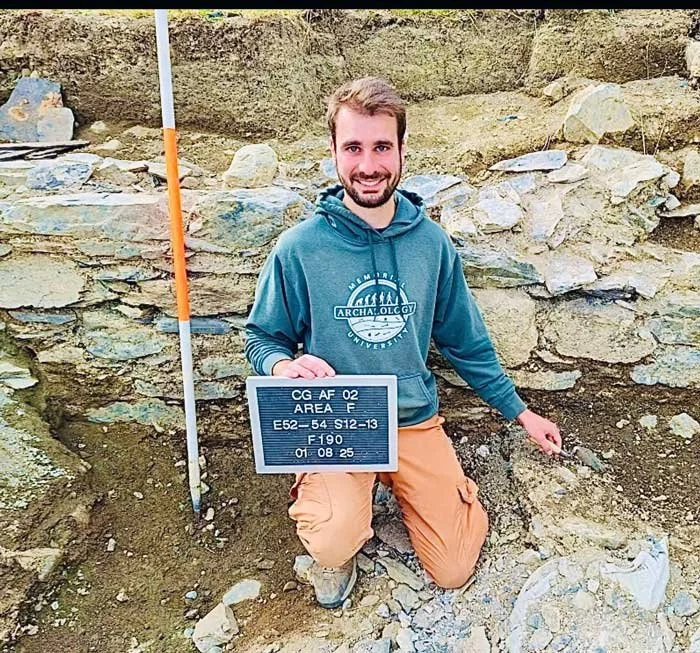
Calum Brydan was the archaeologist who unearthed at the wampum beads at the Colony of Avalon historic site in Ferryland this past summer. Photos courtesy of the Colony of Avalon
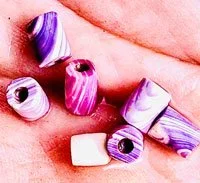
Wampum beads.
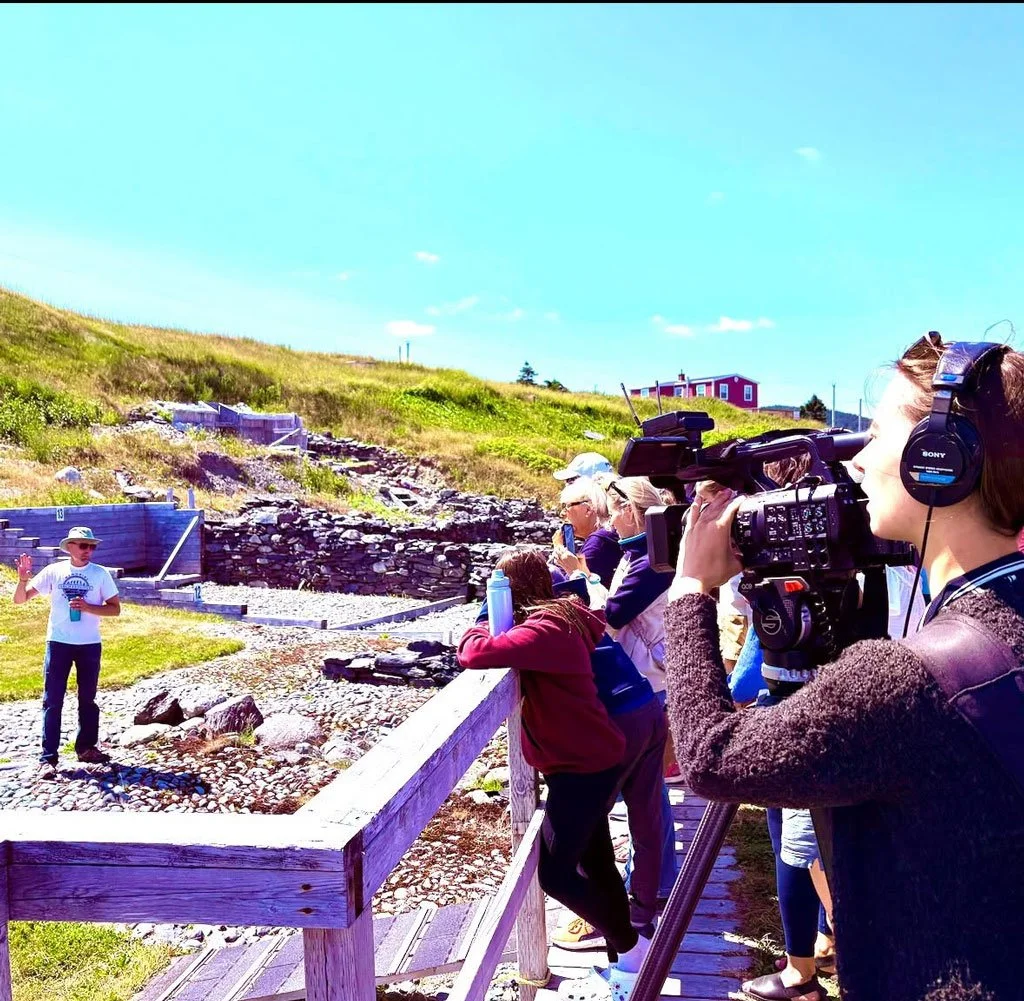
The Colony of Avalon's chief archaeologist, Barry Gaulton, left, addresses a camera crew from the Apple TV show Fishing for History.